The BH: the test every good dog could pass
Sunday 11 October 2026 · CACIT South Africa · Gauteng
Before a dog can follow a track or work with a helper, it has to pass one test first: the BH. This morning at Dowerglen High School, the BH teams were first on the field at CACIT Johannesburg, kicking off day two.
Of everything you’ll see at an IGP trial, the BH is the one most dog owners could realistically aim for. Here’s what it involves, and why it’s worth doing with almost any dog.
What is the BH?
BH is short for the German Begleithundprüfung, or companion dog test. Its full FCI name, BH/VT, adds “with behaviour and traffic part”. It checks whether a dog is a calm, social, reliable companion, both on a training field and out in the real world. The FCI rules are clear about the focus: how well the dog fits into everyday life matters more than perfect technical obedience.
Dogs of all breeds and sizes can take part. You don’t need a German Shepherd or a Malinois, just a healthy dog and a handler who’s willing to train.
How the test works
Before the test starts, the judge checks each dog’s microchip and does a short temperament check, watching how the dog behaves around people and other dogs. A dog that shows behavioural problems can be excused at any point. Unlike the IGP levels, the BH has no gunshot test.
Part 1: Obedience on the field
Two dogs go onto the field together. One works through the routine while the other lies in a down nearby, and then they swap.
| Exercise | What happens | Points |
|---|---|---|
| Heeling on leash | The dog walks at the handler’s left knee on a loose leash, through an about turn and changes of pace, and sits by itself every time the handler stops. | 30 |
| Sit | After a short stretch of heeling, the dog sits on command and stays put while the handler walks away and comes back. | 10 |
| Down with recall | The dog drops into a down on command, waits while the handler walks away, and is then called back. | 10 |
| Down under distraction | The dog lies down and stays there while the other dog works. | 10 |
| Total | 60 |
The judge is looking for a dog that clearly enjoys working with its handler. In the words of the FCI rules, the dog should show that it wants to do each exercise for the handler, not that it has to. Since 2025, handlers may also praise and release their dog after each exercise, which keeps the routine relaxed and happy.
Only dogs that pass this obedience part go on to the second part of the test.
Part 2: Out in public
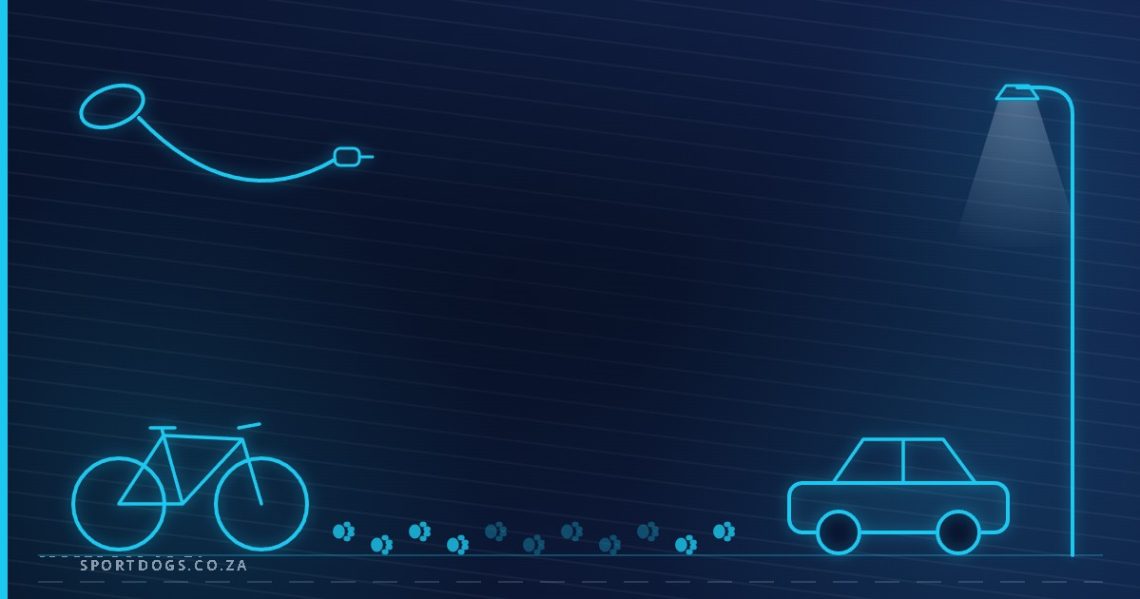
This is what makes the BH special. The test moves off the field into a real public setting, with streets, paths and passers-by. There are no points here: the judge decides pass or fail from the dog’s overall behaviour. The exercises include:
- People: walking on a loose leash along a pavement, past pedestrians and through a group of at least six people, then sitting or lying calmly while someone stops to shake the handler’s hand.
- Cyclists: a cyclist rings a bell and passes from behind, then turns and comes back towards the team.
- Cars: walking past parked cars as an engine starts and a door slams, then waiting calmly when a driver pulls up to ask for directions.
- Joggers or inline skaters: passing at speed, from behind and from the front, without the dog reacting.
- Other dogs: another dog and handler pass by, and the dog stays neutral.
- Left alone: the dog is tied up for a short time while the handler goes out of sight, and has to stay calm while a stranger walks another dog past.
In other words, it covers everything a family dog meets on a walk through the neighbourhood.
Why it’s worth doing with any dog
You might never want to do tracking or protection, and that’s fine. The BH is still worth working towards:
- A dog that walks nicely on a loose leash, ignores cyclists and joggers, and waits calmly outside a shop is a pleasure to live with.
- Training for it builds focus and trust between you and your dog, and gets your dog comfortable with new places, people and other dogs.
- Regular club training gives your dog a workout for its brain as well as its body.
- It’s a recognised qualification, and every result is recorded in the dog’s official scorebook.
Who can take part?
- Any breed, any size: the FCI rules admit dogs of all breeds and sizes.
- Age: the FCI rules set a minimum age of 12 months. Your club can confirm the age requirement for KUSA trials in South Africa.
- Handlers: depending on national rules, first-time handlers may also need to show basic dog knowledge, for example through a short theory test. Your club will tell you what applies.
- Second chances: if it doesn’t go to plan, there’s no waiting period. You can try again at a later trial, just not twice at the same event.
How to get started
- Find a club near you. Our IGP clubs page lists clubs around the country. Go and watch a training session first.
- Start with the basics. Practise loose-leash walking, sit, down and stay, first at home and then in busier, more distracting places.
- Get out into the world. Practise staying calm around traffic, bikes, joggers and other dogs, because that’s half the test.
- Enter a trial when you’re ready. How long that takes depends on your dog and how often you train, and your trainer will tell you when it’s time.
What comes after the BH?
Once your dog has its BH, the whole sport opens up. You can go on to the full IGP titles, which combine tracking, obedience and protection, or focus on one discipline with tracking-only, obedience-only or protection-only titles. There are also the international companion dog levels, IBGH 1 to 3, for teams who want to take obedience further.
Catch up on this weekend’s posts:
Well done to our BH teams
Congratulations to the two teams who passed the BH-VT at CACIT Johannesburg: Ashleigh Williams with Wigo Barnero and Tariah Moodley with Von Wohlstein Jagger. The BH is where every IGP dog’s story starts. See all the results, overall champions and phase winners on our CACIT page.
Get involved
- Find an IGP club near you: IGP Clubs
- Meet our sponsors: CACIT sponsors
- Questions? Contact us